


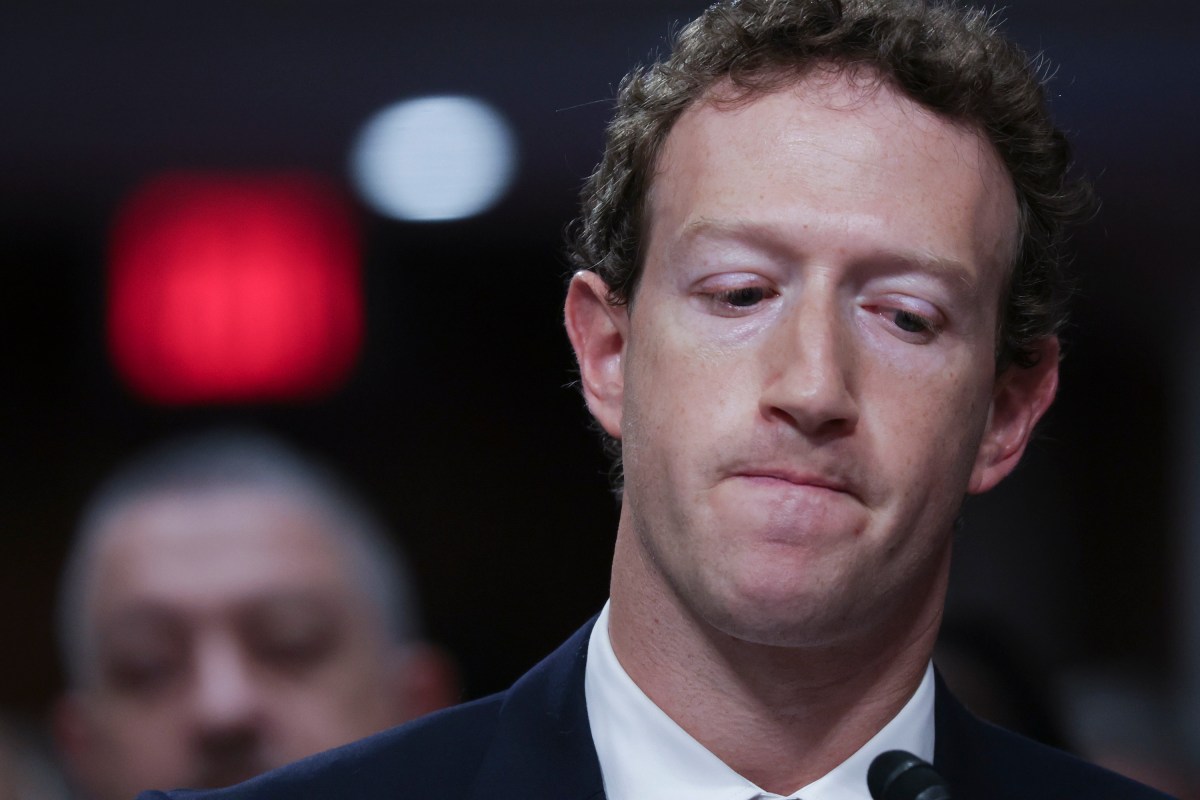
In an internal email surfaced as part of the Meta antitrust trial, Meta CEO Mark Zuckerberg fretted about the potential that the company’s Instagram acquisition may cannibalize Facebook. Were that to happen, it could lead to the “network collapse of the more engaging and profitable product,” a worried Zuckerberg told other Meta executives in a confidential message.
Zuckerberg proposed multiple ways to prevent this cannibalization from occurring, including building more bridges between Meta’s apps to make them function as a single network (suggesting that Instagram was contributing to Facebook’s loss of cultural relevance). He also openly wondered if Facebook would be better served by spinning out Instagram as a separate business.
In its trial against Meta, the U.S. Federal Trade Commission (FTC) is attempting to prove that the company is operating a social networking monopoly and that its acquisition of competing apps like Instagram and WhatsApp allowed it to maintain its dominant position in the market. As evidence, the prosecution is surfacing emails and other messages that indicate that Zuckerberg understood the threat Instagram posed to Facebook, even after it became a part of Meta’s larger family of apps.
In an email dated May 2018, Zuckerberg explained to other Facebook executives — including Meta Chief Product Officer Chris Cox, now former COO Sheryl Sandberg, former CTO Mike Schroepfer, former Chief Growth Officer (now COO) Javier Olivan, and former CFO David Wehner — that he was concerned the company’s approach to its family of apps was not correct.
Instagram hurt Facebook’s growth
Specifically, Zuckerberg was worried that Instagram’s growth could hurt Facebook itself, saying that internal data shows that when users joined Instagram, their Facebook engagement “declines significantly.”
“We are starting to get more data that suggests this hollowing out of Facebook usage compounds as a larger percent of the population gets on Instagram,” Zuckerberg wrote in a section of the email titled “cannibalization and network collapse.”
The more the company pushed Instagram’s growth, the greater the threat Instagram posed to Facebook, Zuckerberg appeared to conclude.
“This raises the issue that our models for the future may be wrong,” Zuckerberg continued. “We currently expect both Facebook and Instagram to be able to grow, but it seems likely to be the case that if we promote Instagram to be around the same size as Facebook, that will have significant negative effects on Facebook that we are not currently modeling,” he wrote. “That is, the Facebook network can likely sustain decreased engagement among some of its members, but if engagement among its entire population is hollowed out, that may lead to significantly worse outcomes than we currently expect,” Zuckerberg said.
He also said that Instagram’s growth was mainly being driven by distribution from the Facebook app and its use of the Facebook friend graph.
“What this suggests is that while we hope to grow two products, there’s a real chance we may be causing network collapse of the more engaging and more profitable product to replace it with one that is less engaging and less profitable,” Zuckerberg said.
As a result, he said that Facebook was reducing its promotions to Instagram and that Instagram should introduce new integrations that would tip the balance back towards Facebook instead. He explained that he wanted bridges to be built between the two networks so the apps “increasingly function as a single network in more respects.”
As one example, Zuckerberg pointed out that it should be easier for video creators with large audiences to engage across both apps more easily. Plus, he wanted to combine the voice and video calling networks across WhatsApp, Messenger, and Instagram to become a single network. (Meta eventually introduced cross-platform messaging in 2020, before rolling it back years later.)
Family of apps strategy versus a spin-out

Notably, Zuckerberg also called out the difficulties of building new products and services within Instagram and WhatsApp because of “their founder leadership.”
He lamented that management couldn’t openly discuss its concerns about Instagram in particular, as it might demoralize the team and prevent the company from retaining Instagram co-founders Kevin Systrom and Mike Krieger.
He also pushed for the company to rethink its branding of products, so that Facebook’s brand remained front and center.
“When you open those apps, it would say ‘Instagram by Facebook’ and ‘WhatsApp by Facebook,’” Zuckerberg proposed in his email. “We may even need to put Facebook branding in the chrome of those apps where the app names and logos are today to cement this relationship in people’s minds.”
Zuckerberg pushed for Meta to rethink its branding so that Facebook remained front and center.
In 2021, Facebook instead rebranded as Meta, whose logo now appears across all the company’s apps.
If the FTC wins its case, Meta may have to spin out Instagram and WhatsApp as separate businesses. Ironically, that’s something Zuckerberg himself suggested in his 2018 email as an alternative strategy — and possibly the “only structure” to accomplish the company’s goals. Spinning out Instagram could preserve Facebook’s growth, focus Meta’s teams, and allow the company to retain Systrom, wrote Zuckerberg. (Instagram’s founders left later that same year, in September 2018.)
Ultimately, Meta chose not to spin out its acquisitions. But Zuckerberg had warned the other execs in the email that there’s a “non-trivial chance” that Meta could be forced to spin out Instagram and WhatsApp in the next 5 to 10 years, making all its work building a family of apps “something we don’t get to keep.”
If the FTC succeeds in court, Zuckerberg will be proven right.
Meta downplayed the magnitude of these emails in a statement shared with TechCrunch.
“Out-of-context and years-old documents about acquisitions that were reviewed by the FTC more than a decade ago will not obscure the realities of the competition we face or overcome the FTC’s weak case,” a Meta spokesperson said.


