


Best Free Amazon Gift Card Rewards
The Ring is Cleared, the Labs Light Up
Kingdom Arena in Riyadh was still littered with gold confetti on the morning of October 18, 2026. The night before, British heavyweight champion Daniel Dubois had just scraped past American challenger Jared Anderson. It was a classic. Twelve rounds of heavy-metal boxing that ended in a razor-thin split decision on the judges’ scorecards.
But by Sunday afternoon, the real fight had moved from the canvas to the laboratories. The boxing world is now facing a different kind of split decision. This one involves test tubes, urine samples, and a massive jurisdictional battle between the Voluntary Anti-Doping Association (VADA) and the local regulatory bodies in Saudi Arabia. It is a modern sporting mess, and nobody seems to know who has the authority to clean it up.
Two Testing Bodies, Two Opposing Results
To understand the chaos, you have to look at the conflicting reports that emerged within hours of the final bell. On one side is VADA, the gold standard for voluntary testing in professional boxing. According to leaked documents confirmed by camp insiders, a VADA sample collected from Dubois on October 1 in London flagged a trace amount of ostarine. Ostarine is a selective androgen receptor modulator (SARM) banned at all times by the World Anti-Doping Agency.
On the other side is the Saudi Arabian Anti-Doping Committee (SAADC). They conducted their own random tests on both fighters when they arrived in Riyadh on October 12, and again immediately after the fight on October 17. The SAADC tests came back entirely clean.
This has created an unprecedented standoff. Is a fighter clean if he passes the local commission’s test but fails an independent international one? The answer depends entirely on who you ask.

The Timeline of a Quiet Crisis
The timeline of how this information leaked has only added to the suspicion. VADA reportedly notified both camps and the local organizers of the adverse analytical finding on October 14, three days before the fight. Yet, the event went ahead anyway.
Why? Because under the regulatory framework established for the Riyadh Season card, the local Saudi commission holds the final licensing authority. The Saudi regulators chose not to suspend Dubois because his B-sample had not yet been analyzed. Under their protocols, a fighter is presumed innocent until the B-sample confirms the initial finding.
“We followed every protocol to the letter,” said a representative from the local organizing committee, speaking on the condition of anonymity. “You cannot cancel a global event of this magnitude based on a preliminary screening that has not been verified by a secondary analysis. Especially when our own local tests showed absolutely nothing in the fighter’s system during fight week.”
The Promoter’s Defense and the American Fury
Unsurprisingly, Jared Anderson’s team is furious. They feel they were sent into the ring against an opponent who should have been suspended days prior. Anderson’s promoter has already filed an official petition with the International Boxing Federation (IBF) to have the result of the fight overturned to a no-contest.
“This is about fighter safety,” Anderson’s camp said in a fiery public statement. “If a governing body is notified of a positive test three days before a heavyweight fight, and they let the fight happen anyway, they are playing Russian roulette with these guys’ lives. We want answers, and we want them now.”

Dubois’ promoter, Frank Warren, has urged caution, pointing to the possibility of supplement contamination. He pointed out that the levels of ostarine detected were in the picogram range—fractions of a billionth of a gram.
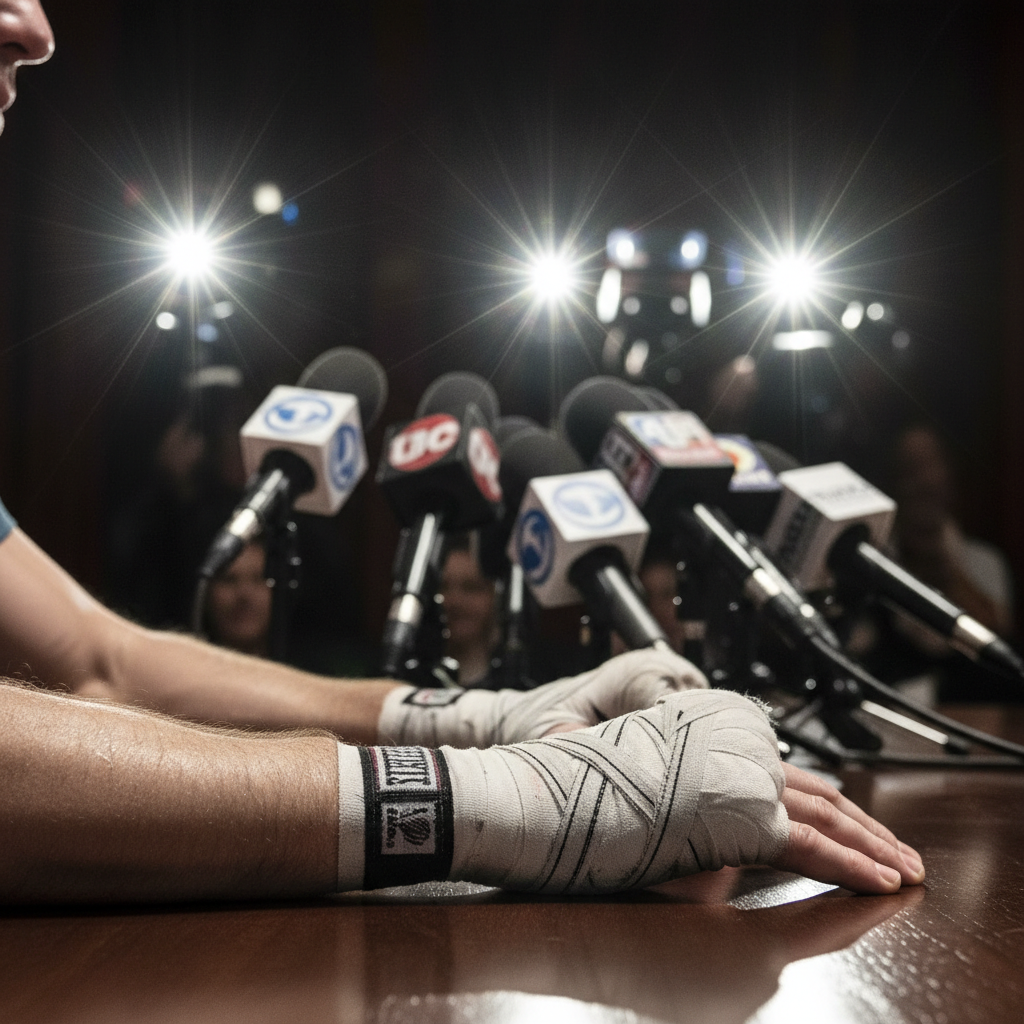
“Daniel has never cheated in his life,” Warren told reporters in a hastily assembled press conference. “We are looking at an incredibly minute amount here. We believe this is a clear case of a contaminated over-the-counter supplement. The fact that his Saudi tests were completely clear shows he had no active performance-enhancing drugs in his system when he stepped into that ring.”
The Geopolitical Turf War Over Boxing Regulations
Beyond the immediate fate of the heavyweight title, this controversy exposes a growing rift in the sport. Over the last three years, Saudi Arabia has become the undisputed capital of big-time boxing. The kingdom’s financial muscle has brought together fights that previously took years to negotiate.
However, this rapid shift in power has left traditional western regulatory bodies, like the British Boxing Board of Control (BBBofC) and the Association of Boxing Commissions in the United States, feeling sidelined. These organizations have long relied on strict VADA oversight. Now, they find themselves competing with a sovereign nation that writes its own rules.
If the BBBofC decides to suspend Dubois domestically based on the VADA test, he could still theoretically fight in Riyadh or other international venues. The sport’s fragmented nature has never been more obvious.
What Happens Next?
The immediate focus is on the testing of Dubois’ B-sample, which is scheduled to take place at a WADA-accredited laboratory in Switzerland next week. If that sample also comes back positive, the pressure on the IBF to strip Dubois of his title will become unbearable.
But even if the B-sample is clean, or if the case is dismissed as supplement contamination, the damage to boxing’s regulatory credibility is already done. The Riyadh Season has proven that it can deliver the fights the fans want to see. Now, it must prove that it can police them with the same level of authority.


