


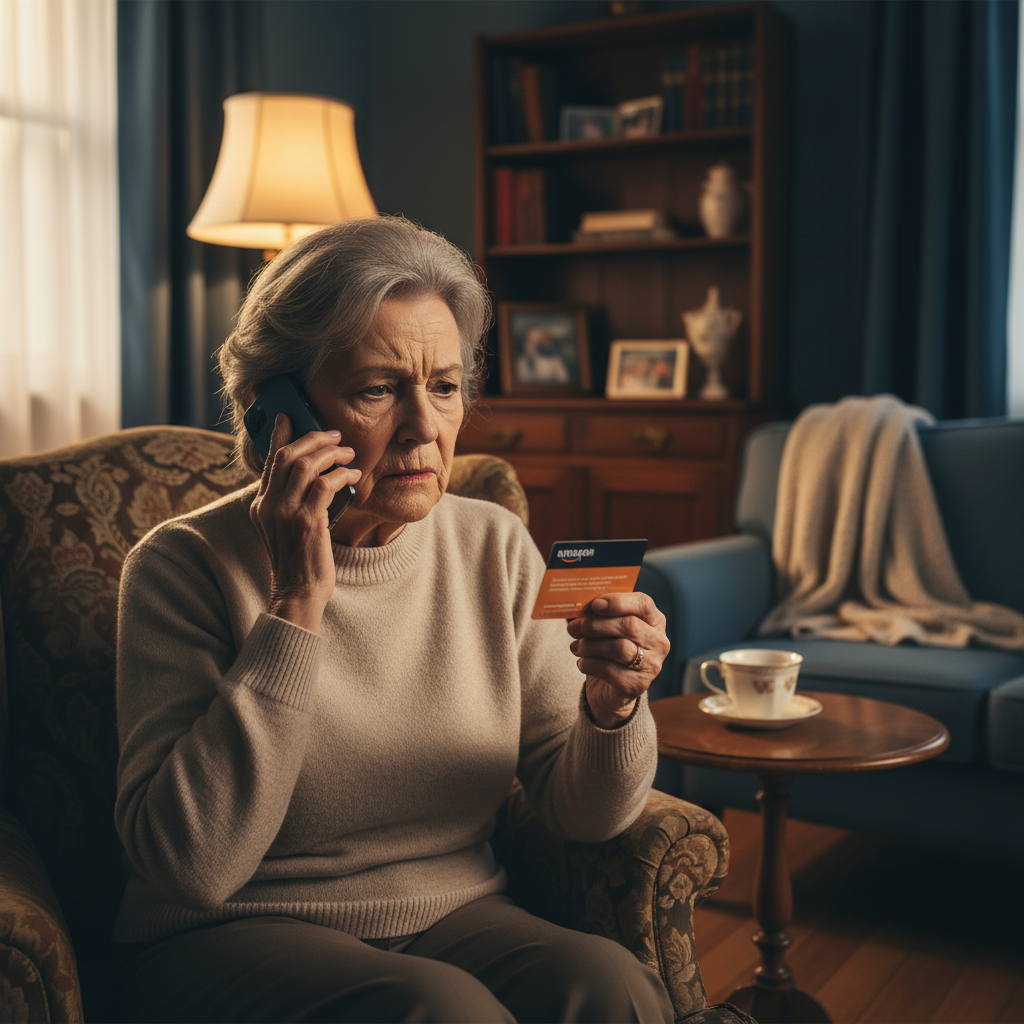
Imagine getting a frantic call from your grandson. He is crying, panicked, and says he just got into a car accident. He needs bail money immediately. The voice sounds exactly like him—the same pitch, the same cadence, the same familiar stutter. But it is not him. It is a machine.
Ahead of the busy 2026 holiday shopping season, the Federal Trade Commission (FTC) is sounding the alarm on a sophisticated surge in AI-powered voice cloning scams. This year, the agency warns, fraudsters are increasingly targeting older Americans, using highly convincing, computer-generated voices to manipulate victims into sending thousands of dollars. The preferred payment method for these criminals? Amazon gift cards.
It is a devastatingly simple trick. Scammers need only a few seconds of audio to pull it off.
How Scammers Steal a Voice
Historically, impostor scams relied on actors or vague details to trick victims. Today, consumer-grade artificial intelligence has rewritten the playbook. By scraping a short video clip from TikTok, Instagram, or Facebook, bad actors can clone a person’s voice with terrifying accuracy.
Experts warn that technology has gotten so cheap and fast that almost anyone can access it. A three-second clip of your relative talking about their weekend plans is enough to create an entirely new script in their exact voice.
Once they have the cloned voice, scammers call elderly relatives. They create a high-stress scenario: a sudden arrest, a medical emergency, or being stranded in a foreign country. They beg the grandparent not to tell anyone else, claiming they are embarrassed or in deep trouble.

The Shift to Amazon Gift Cards
What makes the latest wave of scams particularly dangerous is the demand for Amazon gift cards. The FTC reports that scammers prefer these cards because they are practically as good as cash but much harder to trace once the digital codes are shared.
The fraudsters tell the victim to go to a local grocery store or big-box retailer, buy multiple high-value Amazon gift cards, and read the numbers on the back over the phone. Once those numbers are gone, the money is gone instantly. There is no chargeback button for a gift card.
Federal investigators note that Amazon gift cards are a prime target ahead of the 2026 holiday season because they are widely available and buying them in large amounts does not always trigger immediate suspicion at checkout lanes.
How to Protect Your Family
The FTC is urging families to have difficult but necessary conversations before the holiday rush begins. Education is the best defense against these emotionally manipulative schemes.
Experts recommend several concrete steps to stay safe:
- Set up a family password: Create a unique, secret word or phrase that only your family members know. If someone calls claiming to be a relative in trouble, ask for the password. If they cannot provide it, hang up immediately.
- Hang up and call back: Never trust caller ID, as scammers can easily spoof phone numbers. If you receive a distressing call, hang up and call the relative directly on their known, saved phone number.
- Slow down: Scammers rely on panic to stop you from thinking clearly. They want you to act fast before you can verify their story. Take a deep breath and contact another family member first.
- Report the call: If you receive a suspected scam call, report it to the FTC at ReportFraud.ftc.gov. Every report helps federal law enforcement track down the networks behind these operations.
As the holiday season approaches, sharing these warning signs with aging parents and grandparents could save them from losing their hard-earned savings to a robotic voice.


