


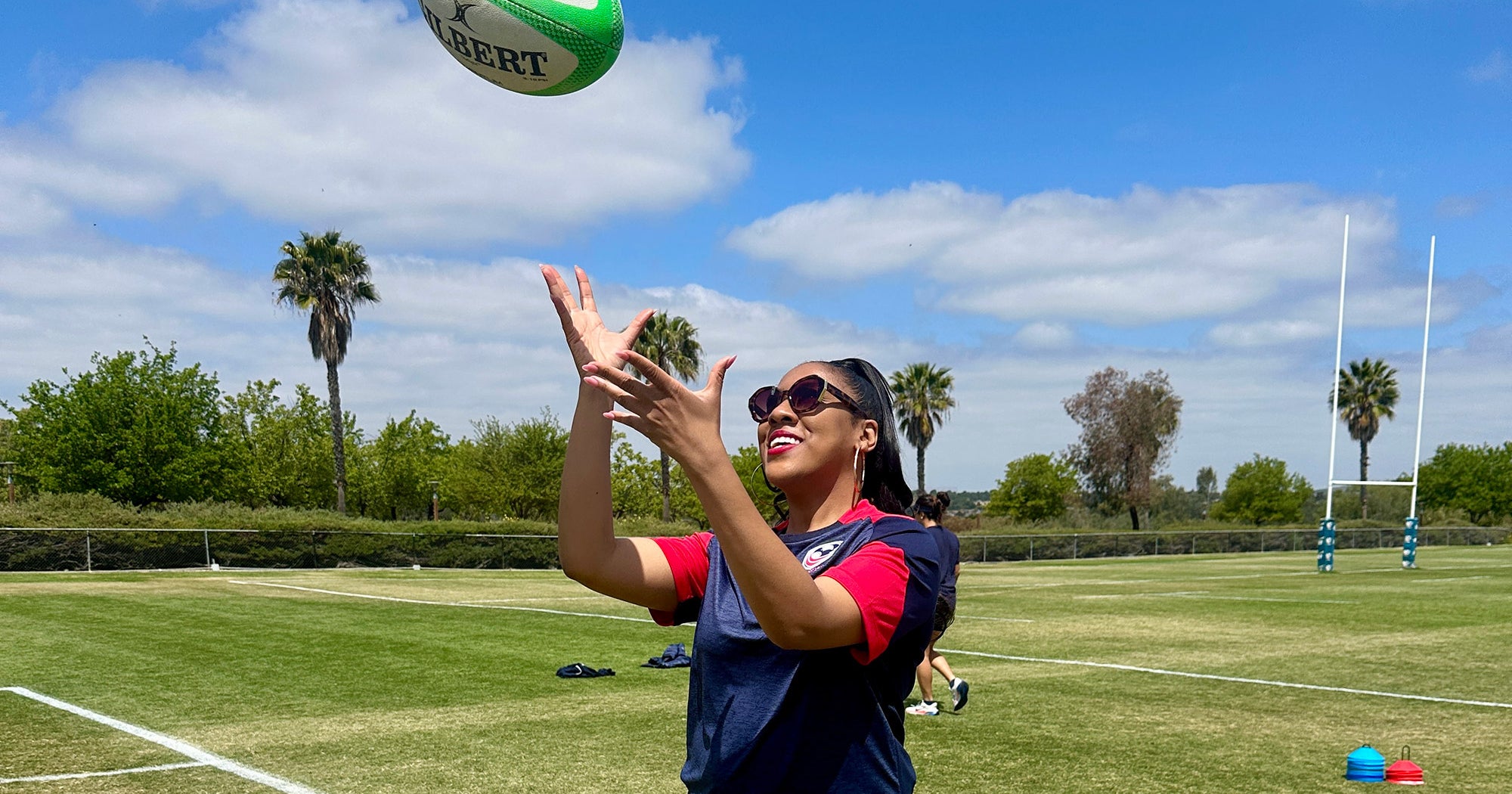
I remember growing up when the most popular high school sports for girls were track and field, volleyball, basketball, soccer, softball, cheerleading and cross-country. But Rugby? It was never even part of the conversation.
So when I was asked by Quest Nutrition to participate in an Olympic training experience with the United States women’s national rugby sevens team, I didn’t hesitate. I was all in.
Admittedly, I was nervous. However, that changed the moment I received the roster and recognized not one but two women who looked like me. Two Black women, smiling from ear to ear, standing tall as part of an Olympic history-making team. My anxiousness gave way to curiosity and pride.
Rugby has long been perceived as a predominately white sport. A 2020 report by The Guardian found that fewer than 8% of players identified as Black, Asian or from another minority ethnic background. And if you isolate that figure to solely Black athletes? The percentage drops even lower.
With representation so limited, the challenge isn’t just physical—it’s mental. It’s knowing you’re one of the few. It’s pushing your body to its limits while also carrying the invisible weight of visibility. But it’s also a gift to compete, to create space and to reshape the narrative in real time.
As two-time Olympian and Bronze medalist Ariana Ramsey reminded me after training, “Great and hard work shapes you into the athlete you’re meant to be. Your willingness to go to practice every day and be consistent is a life skill you’ll always need and use.”
Those words stuck with me because, as a Black woman athlete, or in my case, a journalist, showing up is only half the battle. It’s never just about the game or profession; it’s about rewriting what’s possible, even when the narrative was never written with us—Black women and many others from historically marginalized backgrounds—in mind. Is it about being seen? Yes, absolutely, but it’s also more than that; the older I get, the more I realize it’s about making sure the next little brown girl sees herself, too.
Being in the center of it all at Chula Vista Elite Training Center, one of the top Olympic training campuses in the country, the game itself challenged every physical limit I thought I knew.
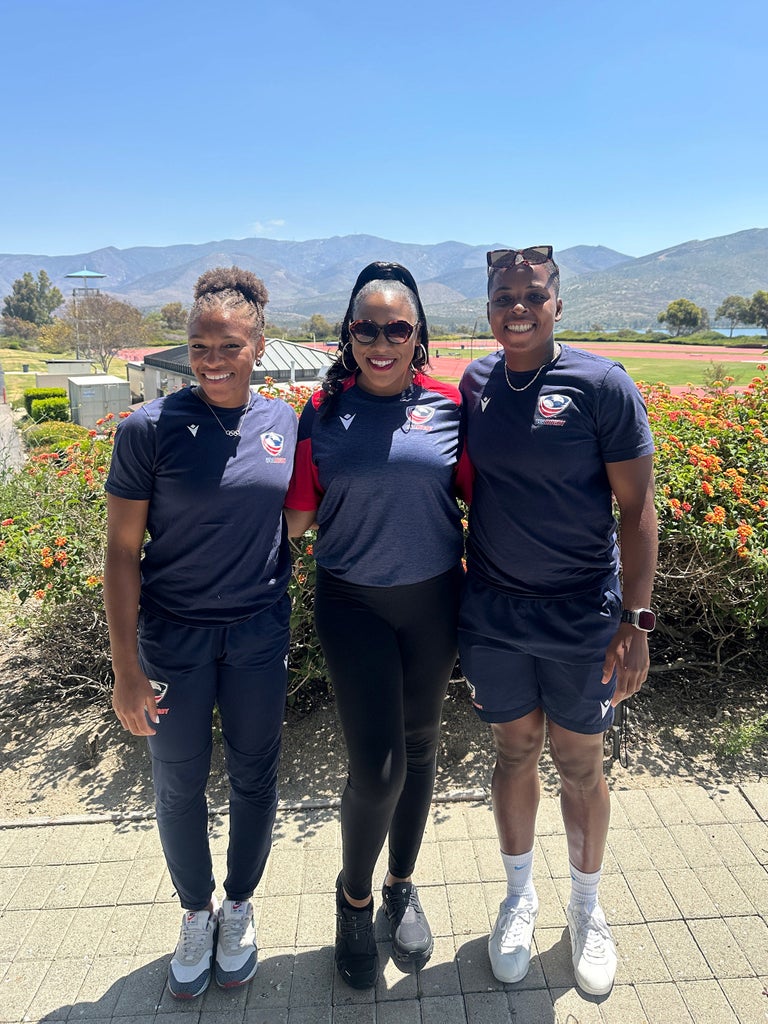
It was exciting, yes, but it also sparked something deeper. It created an internal shift from imposter syndrome to embodied power. I began to understand that true strength in all forms isn’t just about physical ability. I missed a few kicks. My athleticism definitely didn’t kick in the way I hoped. And when it was time to race, did I come in first place? Absolutely not. (laughs)
But the real win had nothing to do with numbers. It was in letting go of the mental chains, silencing the inner critic and quieting the outside noise that sometimes held me back (and at times continues to do so) in my everyday life. The silent whispers of discouragement, defeat or doubt. The lingering question of “What if I’m not enough?” What if things don’t go as I planned? “What if I’m not ready or live up to the expectation?”
That day, I didn’t just show up on the field. I pushed through the noise. And not only did I show up for Dontaira K. Terrell in her full entirety—I proved something to myself and no one else. Even if I didn’t make the field goal, land the tackle or run my fastest race—I laughed through it all. No pressure. I was present. I enjoyed the moment. I took what I couldn’t do and turned it into a lesson, not a curveball.
When everyone else seems to be gaining momentum, racking up wins or living their so-called best lives, it can leave you crashing out and wondering, “What about me?”
It took time to get here. For so long, I carried the weight of trying to be perfect. To be a winner. To overachieve, no matter the cost. That pressure has caused me more harm than good. But letting go of those limiting beliefs? That was the freedom. Who cared if I didn’t catch on as quickly as the person next to me? That was the push I didn’t know I needed.
If I’m honest, I grew up in a household of excellence. College-educated parents. High-achieving siblings. World travelers. Trophy winners. My older sisters aren’t just entrepreneurs and businesswomen—two are attorneys, and one is an audiologist (in fact, the first Black woman to receive a Doctor of Audiology (Au.D.) degree in the Midwest). So, as you can imagine, anything less than my best never felt like an option.
“Growing up, I worked really hard but didn’t immediately see the payout, so it kind of made me feel like what I was doing wasn’t worth it,” American rugby union player Nia Toliver said, reflecting on the advice she’d give to her younger self. “But when I think about where I am now, it’s because of the work I put in. It was a long-term gain—not immediate success.”
Talk about words that resonated.
In today’s society—from television to TikTok, Instagram and everything in between it’s easy to feel like you’re falling behind. When everyone else seems to be gaining momentum, racking up wins or living their so-called best lives, it can leave you crashing out and wondering, “What about me?”
We’re in a microwavable culture. Everything looks instant. But real success? Real alignment? It takes time. And that’s why I’ve had to learn to separate the two to put things into perspective. Just as Maya Angelou reminded us: “All great achievements require time.”
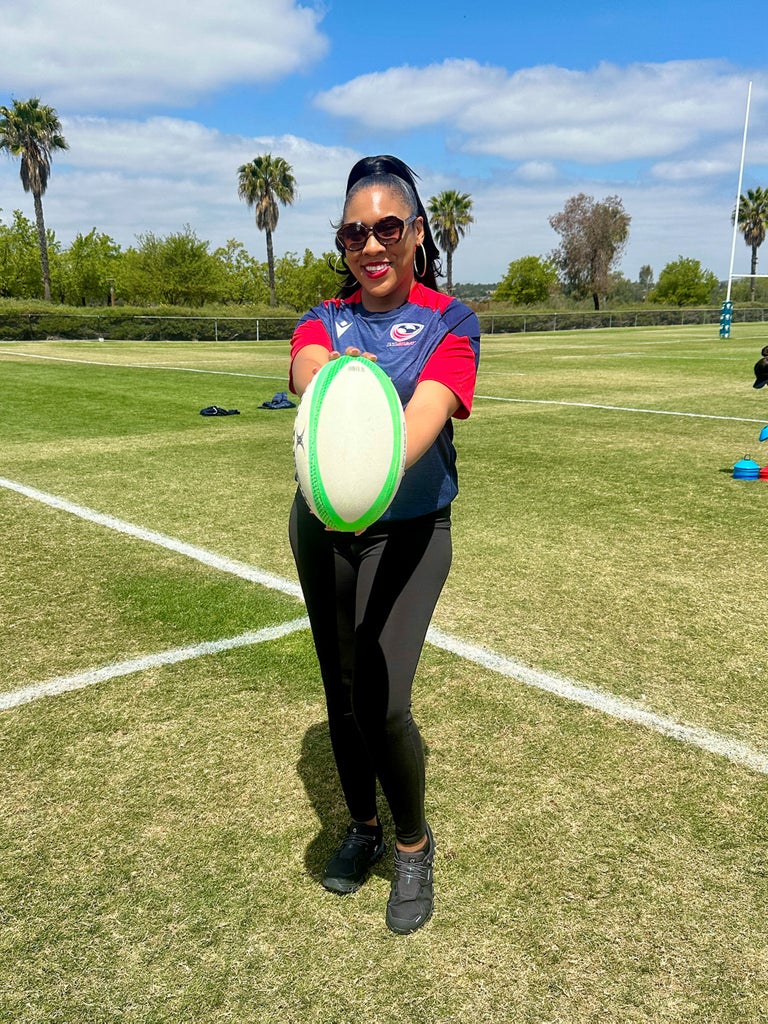
That’s also why I’m adamant about celebrating the small wins. They’re the proof of grit, grind and perseverance behind closed doors. The effort you’re putting in when no one is watching. When the applause is quiet. When the likes on the ‘Gram are few and far between. I know firsthand that those moments are the hardest.
It’s about reframing the narrative: you don’t have to be perfect, but you do have to keep going and keep showing up. After spending the day with the team, when it came time to leave the U.S. Olympic and Paralympic Training Site, another realization struck me. The roles of coaches, sports psychologists, team nutritionists, personal trainers and the list goes on in rugby mirrored something I’ve come to understand in my own life: your support system matters just as much as your skill set.
If you want to win at anything on the field or in real life, let me tell you, that foundation has to be solid. That encouragement, that accountability, that belief in you when you’re doubting yourself? That kind of support is top-tier because no matter how gifted you are, you can’t do it alone. To win in this thing called life, both on and off the playing field, you need people who help you stay in the game, even when life is doing the absolute most.
Like what you see? How about some more R29 goodness, right here?
A Black Girl's Guide To The Austin F1 Grand Prix
Can We Just Let Angel Reese Play Basketball?
Olympian Allyson Felix On Her Career Post-Podium


